
















































































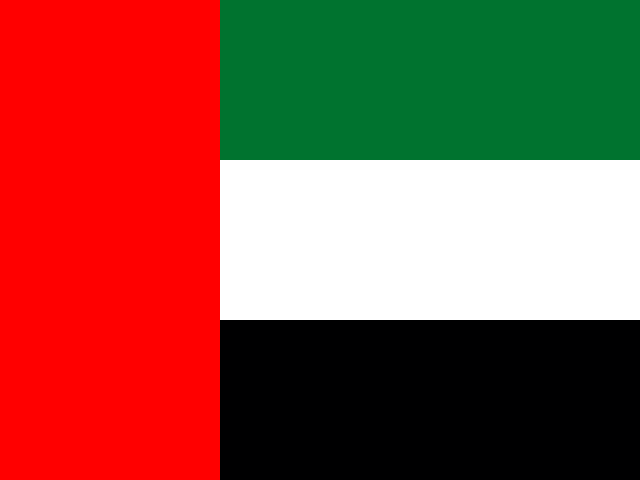




















































































Company formation in the United Arab Emirates
From CompanyFormationWiki, the free encyclopedia of company formation · Last updated
Independent information service. CompanyFormationWiki is not a government agency or company registry, and it is not affiliated with, authorised by or acting for any government, free zone or registration authority. Companies are registered and licences issued only by the competent authorities, which you can contact directly.
In short: To set up a company in the United Arab Emirates, most founders form a mainland LLC or free zone company, registered with the emirate's economic department or the free zone authority.[1] Minimum capital: usually none, varies by authority. Corporate tax: 0% up to AED 375,000; 9% above. Registration: days to a few weeks (as of November 2026).
In the UAE a business can be set up on the mainland, licensed by the economic department of an emirate, or in one of more than 40 free zones such as DMCC, IFZA or RAKEZ. Most mainland activities can now be 100% foreign-owned. A federal corporate tax has applied since 2023.
Business structures
Most founders in the United Arab Emirates form a mainland LLC or free zone company, registered with the emirate's economic department or the free zone authority.[1] Other forms are listed below.
- Mainland LLC – can trade anywhere in the UAE
- Free zone company (FZ-LLC / FZE / FZCO) – licensed by a free zone authority
- Branch – of a foreign or UAE company
- Sole establishment – for individuals
Requirements
Minimum share capital in the United Arab Emirates (2026): usually none, varies by authority. Directors required: 1 manager or director. Local resident director: not required for most activities.[2]
- A trade licence for the chosen business activities.
- A registered office or flexi-desk in the mainland or the free zone.
- Articles or memorandum of association and shareholder documents.
- Registration of ultimate beneficial owners with the licensing authority.
- Corporate tax registration with the Federal Tax Authority.
Registration process
Typical time to register a company in the United Arab Emirates (2026): days to a few weeks.[1] The usual steps are:
- Choose mainland or a free zone, based on activities and customers.
- Reserve the trade name and get initial approval.
- Sign a lease or flexi-desk agreement and submit the incorporation documents.
- Receive the trade licence and certificate of incorporation.
- Register for corporate tax (and VAT if required), open a bank account and apply for residence visas.
Taxation
The corporate tax rate in the United Arab Emirates in 2026 is 0% up to AED 375,000; 9% above.[3] Standard VAT or sales tax: 5%.[3]
| Tax | Rate and notes |
|---|---|
| Corporate tax | 0% on taxable income up to AED 375,000; 9% above |
| Qualifying free zone persons | 0% on qualifying income if all conditions are met |
| Large groups | 15% domestic minimum top-up tax for groups with revenue of €750 million or more |
| VAT | 5%; mandatory registration above AED 375,000 of taxable supplies |
Ongoing compliance
Annual compliance in the United Arab Emirates: Companies renew their trade licence each year, file an annual corporate tax return and VAT returns where registered, and keep UBO records up to date. There is no personal income tax.[1]
Recent changes
Small Business Relief lets resident businesses with revenue up to AED 3 million be treated as having no taxable income, for tax periods ending by 31 December 2026.
Double tax treaties
The United Arab Emirates has about 110 treaties. A double tax treaty decides which country may tax cross-border income and usually caps the withholding tax the paying country can charge.
Domestic withholding tax on payments to non-residents
| Dividends | Interest | Royalties |
|---|---|---|
| 0% | 0% | 0% |
The UAE's withholding tax on payments to non-residents is currently set at 0%, so treaties mainly matter for reducing tax in the other country and for UAE tax residence certificates.
Treaty rates on payments from the United Arab Emirates
Maximum withholding tax the United Arab Emirates charges on payments to a company resident in each country covered by this wiki. Where several rates are shown (for example 5/15%), the lower rate applies only if conditions are met, usually a minimum shareholding, a holding period or a qualifying recipient such as a bank or pension fund.
| Recipient's country | Dividends | Interest | Royalties |
|---|---|---|---|
 Cyprus | 0% | 0% | 0% |
 Estonia | 0% | 0% | 0% |
 Georgia | 0% | 0% | 0% |
 Germany | Treaty expired on 31 December 2021; a new one is under negotiation. Domestic rates apply. | ||
 Ireland | 0% | 0% | 0% |
 Netherlands | 0% | 0% | 0% |
 Poland | 0% | 0% | 0% |
 Singapore | 0% | 0% | 0% |
 Switzerland | 0% | 0% | 0% |
 United Kingdom | 0% | 0% | 0% |
 United States | No income tax treaty. Domestic rates apply. | ||
Rates from PwC Worldwide Tax Summaries (reviewed 9 September 2026). Treaty benefits require proof of tax residence and are subject to anti-abuse rules; check the treaty text before relying on a rate.
Frequently asked questions
How long does it take to register a company in the United Arab Emirates?
Typical registration time in the United Arab Emirates: days to a few weeks (as of November 2026), once all documents are ready. Opening a bank account and tax registrations can take longer.
What is the minimum share capital for a company in the United Arab Emirates?
Minimum share capital in the United Arab Emirates: usually none, varies by authority (as of November 2026).
What is the corporate tax rate in the United Arab Emirates in 2026?
The corporate tax rate in the United Arab Emirates in 2026 is 0% up to AED 375,000; 9% above. See the Taxation section for reduced rates and other taxes.
Can a foreigner own 100% of a company in the United Arab Emirates?
Yes, for most activities, both on the mainland and in free zones. Local director rule in the United Arab Emirates: not required for most activities.
How many tax treaties does the United Arab Emirates have?
The United Arab Emirates has about 110 treaties. Among the 12 countries whose treaty rates this wiki tabulates, there is no comprehensive treaty with the United States or Germany.
What withholding tax applies to dividends paid from the United Arab Emirates?
The United Arab Emirates charges no withholding tax on dividends under domestic law. See the treaty table in the Double tax treaties section.
Should I choose the mainland or a free zone?
A mainland company can trade anywhere in the UAE. A free zone company is often quicker to set up and may qualify for 0% on qualifying income, but trading directly with the mainland market is restricted.
Is there personal income tax in the UAE?
No. Individuals pay no personal income tax, though businesses pay corporate tax and VAT.
Official registries and resources
- Dubai mainland business licensing (Department of Economy and Tourism)
- UAE government portal: business
- Federal Tax Authority
Figures as of November 2026. Rates, thresholds and procedures change; confirm with the official registry, the tax authority or a local adviser before filing.
See also
- Comparison of company formation by country
- Company formation in Georgia
- Company formation in Armenia
- Company formation in Saudi Arabia
- Company formation in Qatar
- All countries
References
Entries marked Official are the registry, government and tax authority sources for this country; footnote numbers in the infobox point to them.
- Official Dubai mainland business licensing (Department of Economy and Tourism). UAE government. Accessed November 2026.
- Official UAE government portal: business. UAE government. Accessed November 2026.
- Official Federal Tax Authority. UAE government. Accessed November 2026.
- UAE Highlights 2025. Deloitte. Accessed November 2026.
- A comprehensive guide to understanding UAE corporate tax obligations. RAKEZ. Accessed November 2026.
- Mainland business licensing. Dubai Department of Economy and Tourism. Accessed November 2026.
- UAE corporate tax rate. StashAway. Accessed November 2026.
- United Arab Emirates: Corporate – Withholding taxes (reviewed 9 September 2026). PwC Worldwide Tax Summaries. Accessed November 2026.
Spotted an error or something out of date? Editors check every suggestion against its source before changing the article.